

The Panther in the Room
A design can begin as fashion and end as history.
More often than not, the two collide.
When fashion borrows from the atmosphere of its time, does the image ever really belong only to fashion?
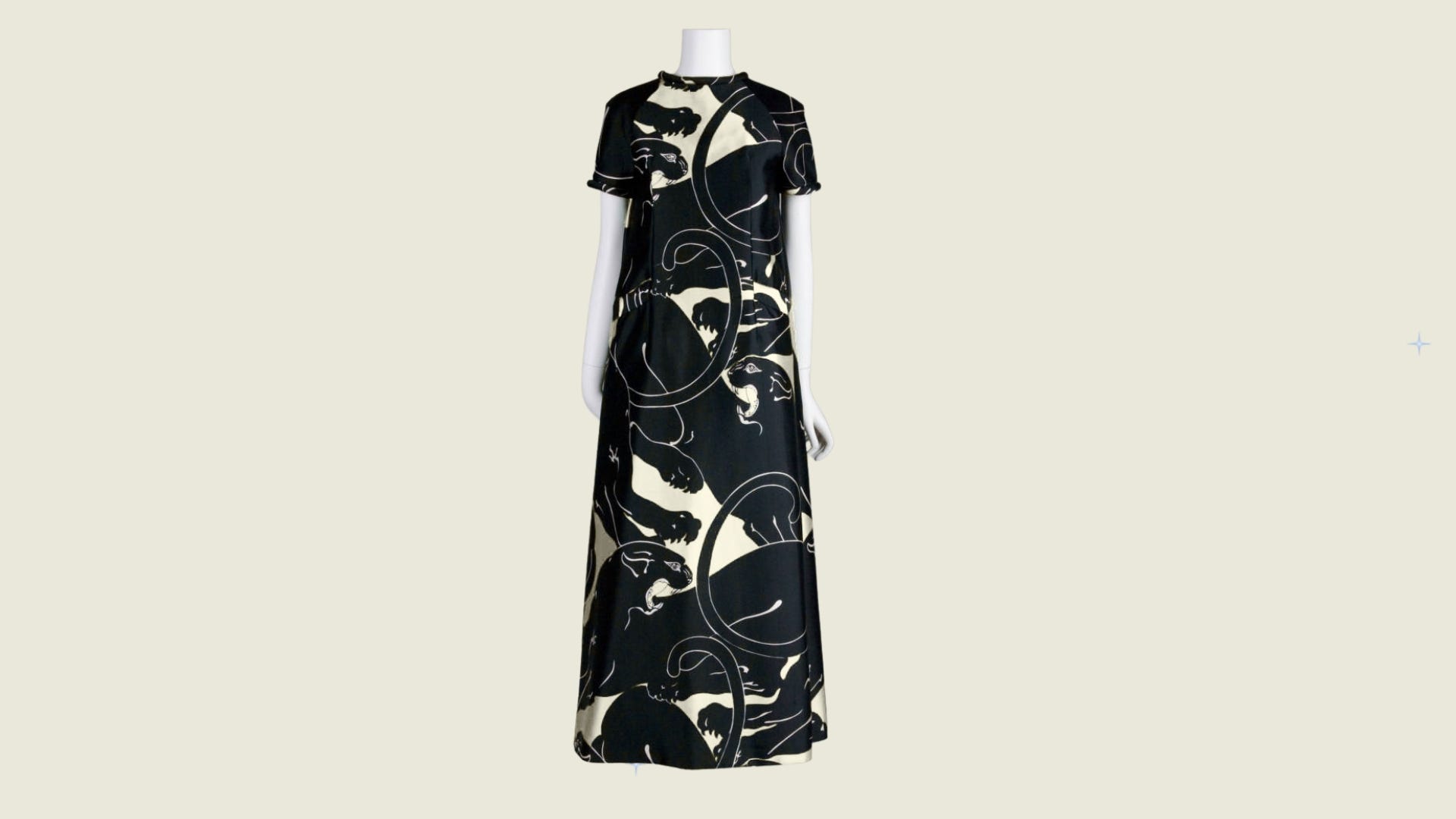
Accompanying it is a striking curatorial note.
“It is not a mere coincidence that Valentino chose a print of black panthers to create this 1967 evening gown. The Black Panther Party was founded in California a year prior. Social change never influenced fashion more so than it did in the late 1960s.”
The Movement Around the Motif
Whether Valentino intended the gown as a direct political reference is ultimately less interesting than the conditions under which the image appeared. It was created at a moment when symbols were acquiring a heightened degree of public force, fashion was becoming ever more permeable to surrounding social currents.
The late 1960s were defined by efforts to challenge existing authority. The civil rights movement, second-wave feminism, anti-war activism, environmental consciousness, and youth counterculture contested inherited ideas about race, gender, class, nation, and respectability. As institutions were questioned, visual identity became increasingly consequential.
Clothing had always communicated allegiance, status, and belief, but during this period its ideological function became increasingly deliberate and visible.
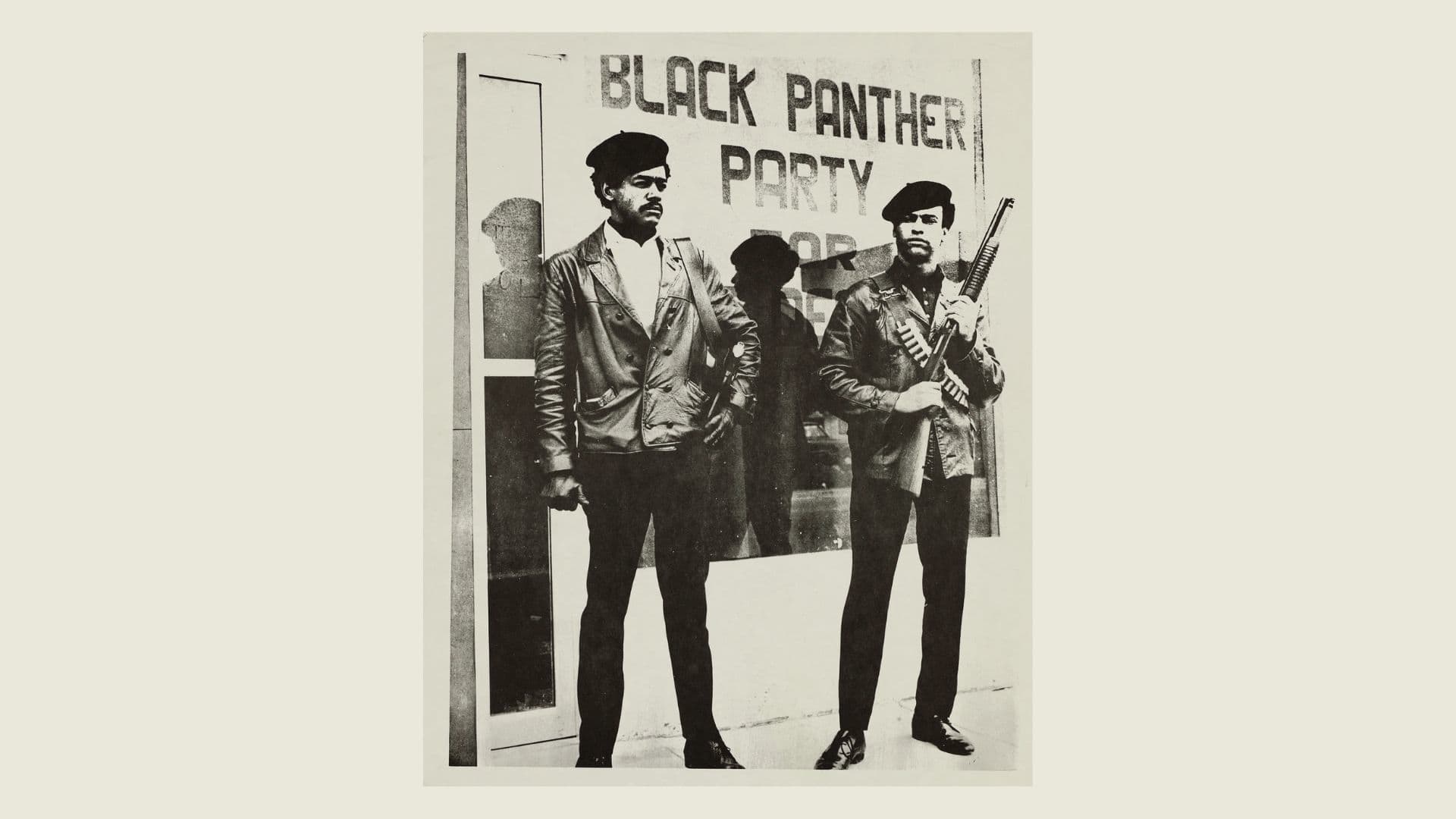
The Black Panther Party understood the power of image with exceptional clarity.
Founded by Huey P. Newton and Bobby Seale in Oakland in 1966, the organization developed a visual language as disciplined as it was immediately recognizable. Leather jackets, berets, dark sunglasses, raised fists, and the panther itself produced an image of collective strength.
Power was communicated through image long before it was understood through policy.
The Uniform & The Gown
Fashion was undergoing a parallel transformation. Designers were abandoning rigid postwar elegance in favor of clothing that reflected changing ideas about identity, liberation, and self-expression. Miniskirts, psychedelic prints, military dressing, denim, leather, and clothing drawn from subcultures entered a wider visual field. Fashion was not simply reflecting social change—it was becoming one of the places in which that change could be rehearsed.
Interpreted through this atmosphere, Valentino’s gown reveals far more than a decorative animal print. By 1967, the black panther had entered the public imagination as a symbol of autonomy, defiance, and strength. Whether consciously or unconsciously, the garment absorbed some of that meaning.
This does not establish that Valentino consciously sought to align the gown with the Black Panther Party. Nor does the object need to be transformed into a political statement it may never have been designed to make. Intention, however, is only one part of an object’s meaning. A motif is not determined solely by what its designer wished to express; it is equally shaped by the lens its viewer possesses.
The gown exists within that ambiguity. It is haute couture, one of fashion’s most rarefied and exclusive forms, yet it bears an image associated with a movement concerned with racial power, economic inequality, and social transformation. The distance between those worlds is substantial. Their visual collision is what makes the gown difficult to dismiss.
It is not only beautiful—it is unstable.
Fashion is often considered superficial because it deals in appearances, I argue that appearance is one of the primary ways power makes itself visible.
Political movements adopt uniforms, institutions enforce dress codes, social classes refine their signals. Every era produces silhouettes that reveal what it admires, disciplines, fears, or desires.
The panther gown reminds us that fashion does not emerge in isolation, but from the pulse of its culture.
Alessandro Michele’s Valentino
Since Alessandro Michele’s appointment to Valentino in March 2024, his tenure has unfolded as an extraordinary homage to the house’s archives. Personally, it stands among the most compelling examples of archival revival in contemporary fashion, deserving of an essay in its own right.
Under Michele, the panther has been subject to graphic treatments, and even T-shirts bearing the phrase “Panther 60 Lady.” The number nods to Valentino’s founding year, but the panther refuses to behave as a neutral logo. It arrives carrying decades of accumulated meaning, a symbol not only revived by Michele but repeatedly revisited by his predecessor, Pierpaolo Piccioli.
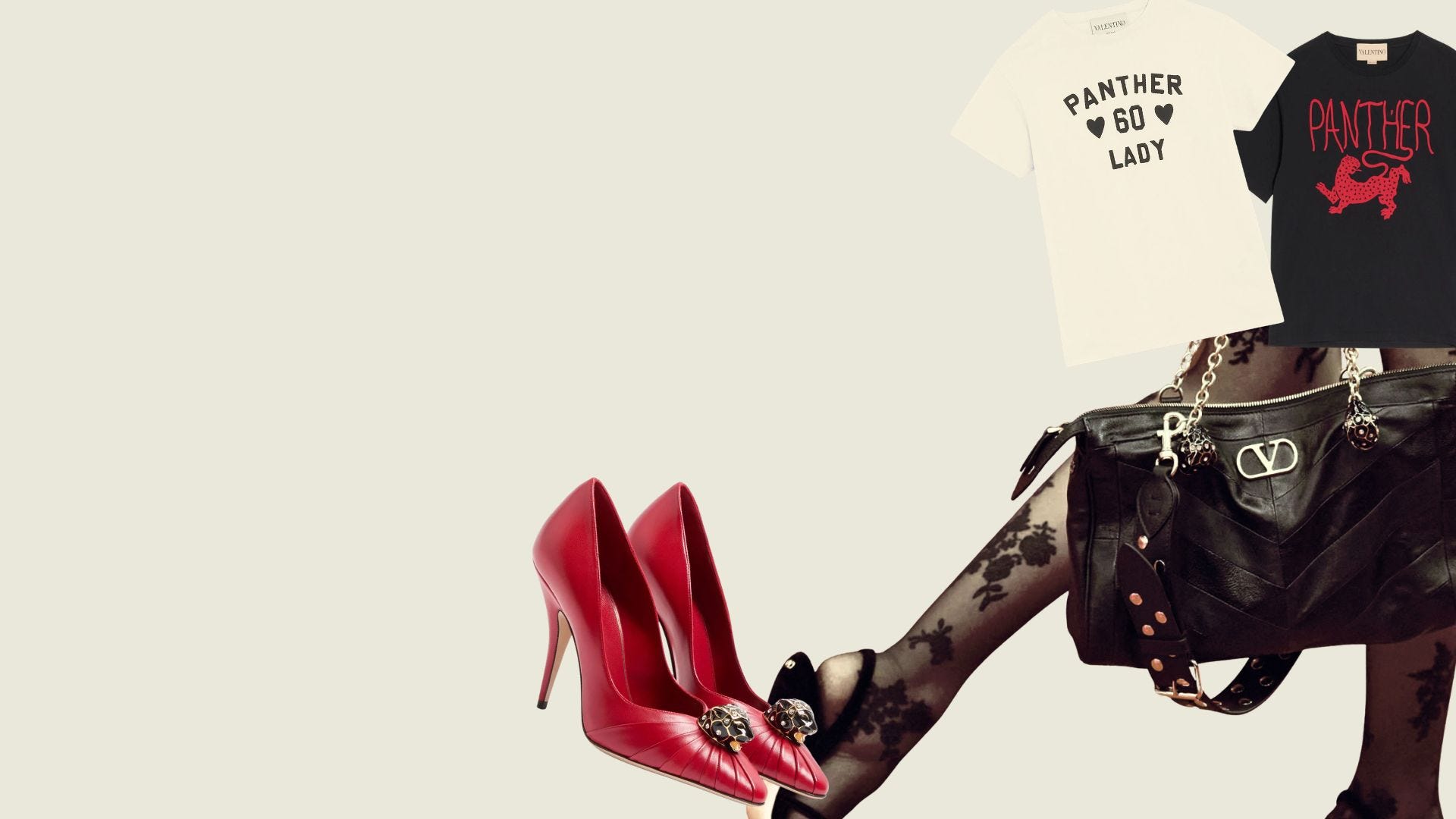
The panther’s reappearance under Michele is revealing—he collapses couture, costume, souvenir, and merchandise by way of personal signature. An image once rendered across an evening gown can return decades later on a printed t-shirt, detached from its original material, silhouette, and setting.
Michele is playful, commercial, knowingly nostalgic—an archive is full of symbols that have lived other lives. The panther gown reminds us that fashion is never separate from the world that produces it.
Perhaps that is why the dress still feels relevant; it is not simply a beautiful object, nor is the panther simply a decorative motif. It is evidence that fashion and history are impossible to separate—a symbol enters couture, passes into museums, resurfaces on a T-shirt decades later.
Culture leaves its fingerprints everywhere.
Fashion is cultural evidence.
Musings on archival fashion, symbolism, and the systems of thought shaping how we understand beauty, history, and ourselves.
By Abi Hoffman